Hip and Knee Replacement Outcomes
Measuring what matters to patients
When considering hip or knee replacement, patients want to know more than how the procedure is performed. They want to understand how patients recover, how much pain and function improve, and how safely surgery can be completed.
Dr. Gill tracks patient-reported outcomes and clinical quality measures following primary hip and knee replacement. These results help evaluate the entire treatment process—from surgical planning and recovery protocols to long-term improvement in mobility and function.
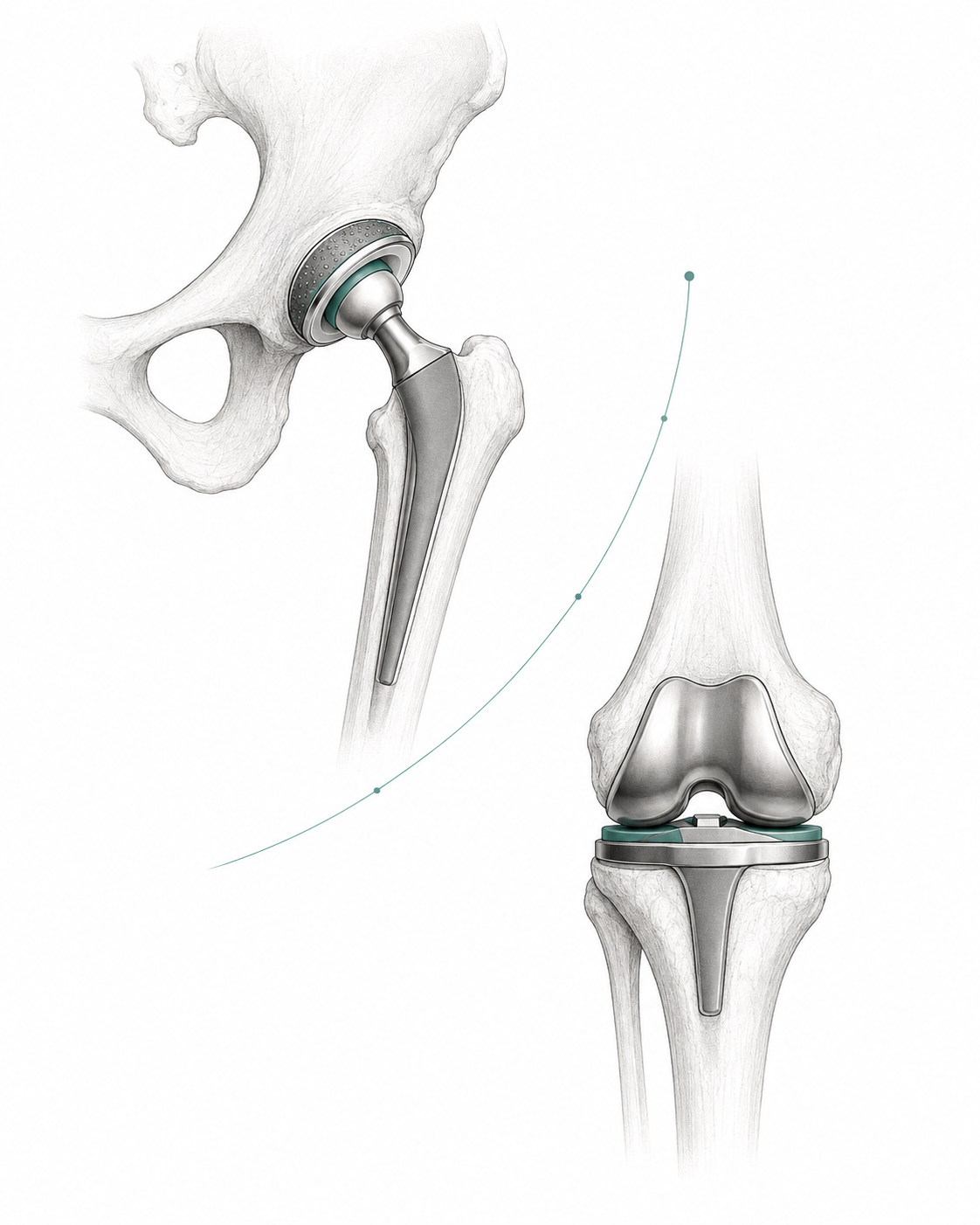
Joint Replacement Experience
543
Primary hip and knee replacements tracked from 2024 through July 2026
396 (72.9%) performed at ASC, 147 (27.1%) performed at hospital
0.5%
Periprosthetic joint infection rate
2 infections among 396 ASC joint replacement procedures
98%+
Hip and knee replacement patients discharged directly home
These clinical quality measures reflect primary joint replacement procedures performed at the Watauga Orthopaedics Center for Advanced Bone and Joint Surgery during the 2024–2026 reporting period. The infection rate represents infections identified and recorded during the reporting period. No surgical outcome is guaranteed, and individual risks vary.
Measuring Patient-Reported Outcomes
Patient-reported outcome measures, commonly called PROMs, allow patients to describe their pain, mobility, and ability to perform everyday activities before and after surgery.
Hip replacement patients complete the HOOS Jr., while knee replacement patients complete the KOOS Jr. Both are scored on a scale from 0 to 100, with higher scores representing better joint function and fewer symptoms.
These scores are not percentages of satisfied patients. They are standardized measures used to track how pain and function change following joint replacement.
Anterior Hip Replacement
Improvement in pain and function
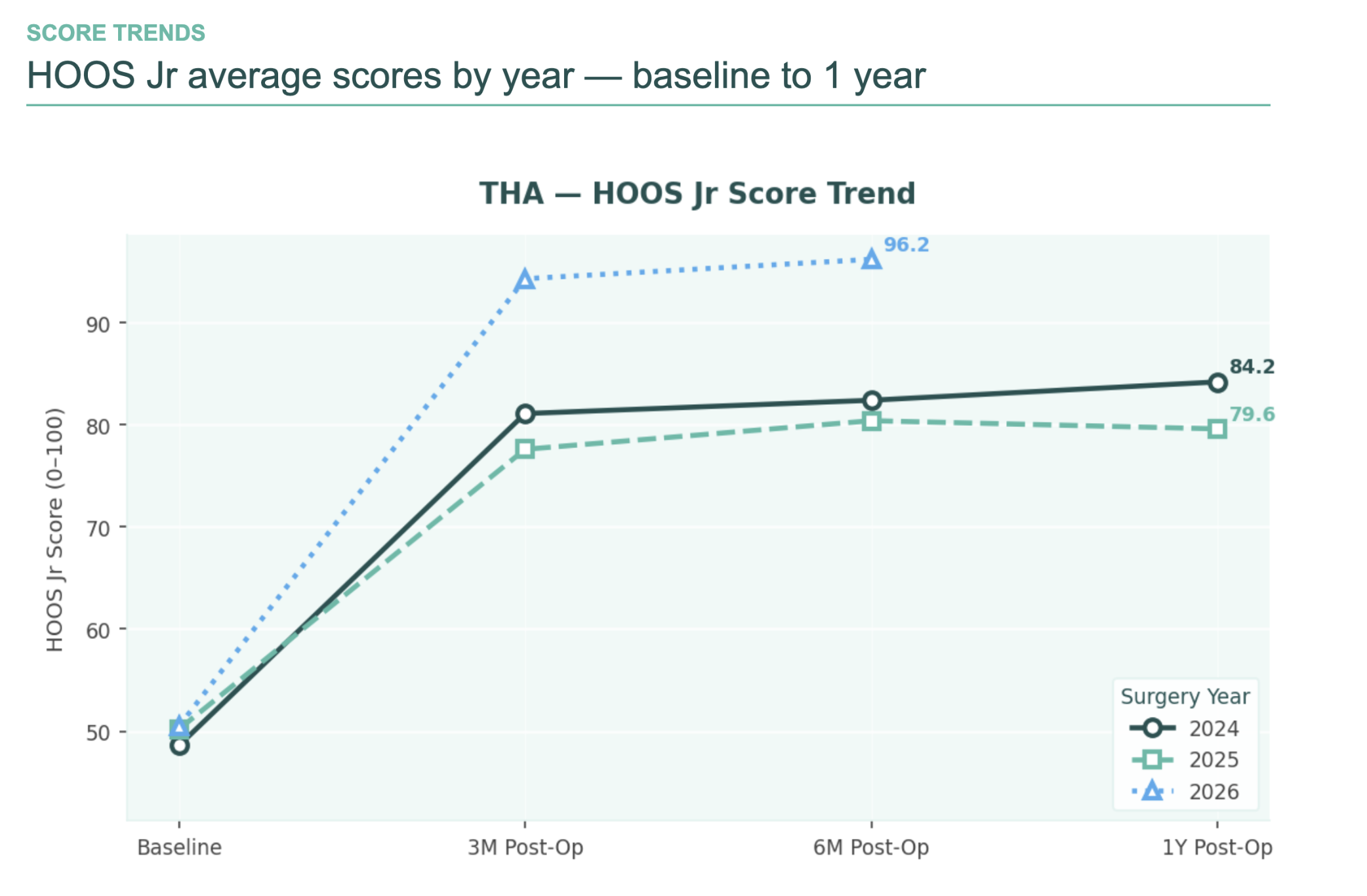
Patient-reported outcomes were available for 246 total hip replacement patients.
49.9
Average HOOS Jr. score before surgery
82.4
Average HOOS Jr. score at one year
+ 32.5 points
Average improvement at one year
98.9%
Discharged directly home after surgery
On average, patients reported substantial improvement in hip pain, mobility, and daily function during the first year following total hip replacement.
Most anterior hip replacements are performed using a structured outpatient pathway when medically appropriate.
Robotic-Assisted Knee Replacement
Improvement in pain and function
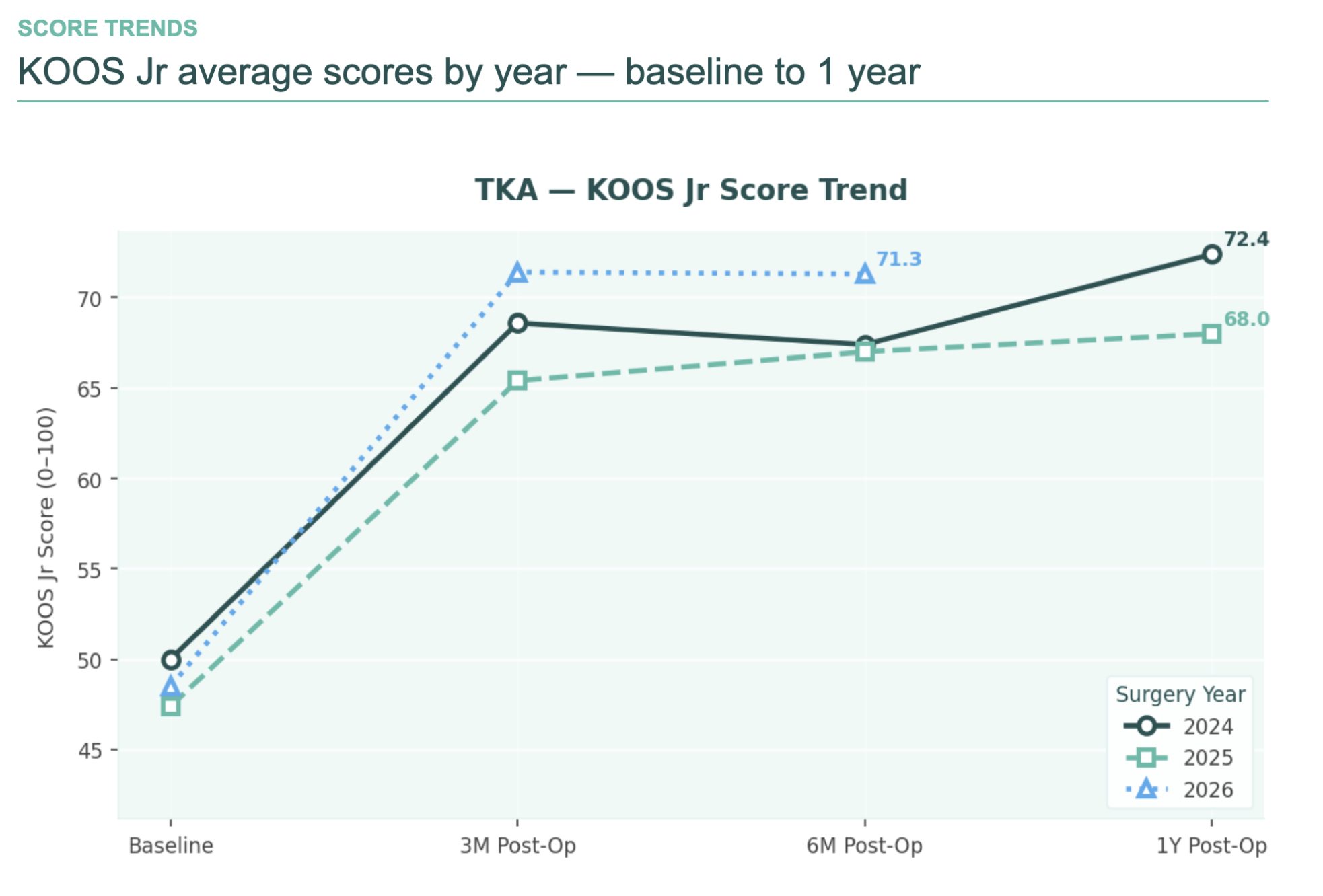
Patient-reported outcomes were available for 315 total knee replacement patients.
48.1
Average KOOS Jr. score before surgery
72.3
Average KOOS Jr. score at one year
+ 24.2 points
Average improvement at one year
98.6%
Discharged directly home after surgery
On average, patients reported substantial improvement in knee pain, mobility, and daily function during the first year following total knee replacement.
Robotic assistance, individualized implant positioning, multimodal pain management, and structured rehabilitation are incorporated into the treatment pathway.
Understanding These Results
Patient-Reported Improvement
HOOS Jr. and KOOS Jr. scores measure pain, mobility, and everyday joint function from the patient’s perspective. Higher scores indicate better function and fewer symptoms.
Home Discharge
Home discharge means the patient was able to return directly home after surgery instead of being admitted to a hospital or transferred to another facility.
Infection Rate
The infection rate reflects postoperative infections recorded in the surgery center’s quality data during the reporting period. Infection is an uncommon but recognized risk of joint replacement surgery.
Outpatient Joint Replacement in Johnson City
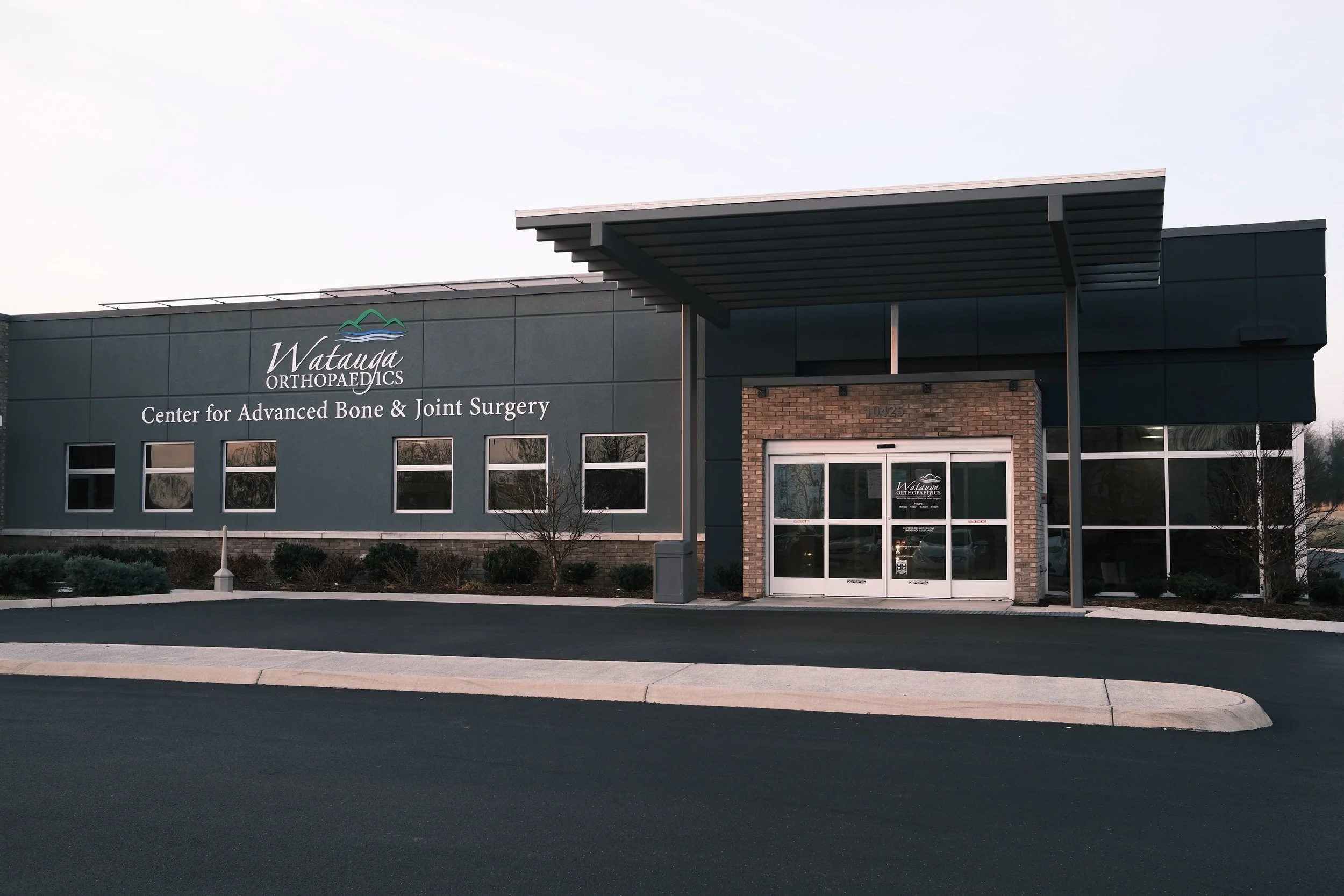
Most of Dr. Gill’s joint replacement procedures are performed at the Watauga Orthopaedics Center for Advanced Bone and Joint Surgery, an AAAHC Center of Excellence for Joint Replacement.
The outpatient joint replacement pathway includes:
Preoperative medical screening and optimization
Patient and family education
Contemporary anesthesia and pain-control protocols
Mobilization shortly after surgery
Coordinated physical therapy and postoperative follow-up
Direct access to the clinical team when concerns arise
Not every patient is an appropriate candidate for outpatient surgery. The surgical setting is selected based on medical history, available support, procedure type, and individual safety considerations.
Frequently Asked Questions
-
HOOS Jr. and KOOS Jr. are standardized patient questionnaires used to measure joint pain, stiffness, mobility, and the ability to perform everyday activities. Scores range from 0 to 100, with higher scores representing better joint function and fewer symptoms.
-
No. HOOS Jr. and KOOS Jr. scores are standardized measures of pain and function, not percentages of successful or satisfied patients. The change between the preoperative and postoperative score demonstrates the average improvement reported by the patient group.
-
Recovery continues for months after joint replacement. A one-year measurement provides a more complete picture of improvement after strength, mobility, and joint function have had time to recover.
-
Infection is an uncommon but serious potential complication of hip or knee replacement. Multiple precautions are used before, during, and after surgery to reduce this risk. Individual risk varies based on overall health, medical conditions, and other patient-specific factors.
-
No. These figures represent averages across groups of patients. Individual results vary based on overall health, severity of arthritis, physical conditioning, rehabilitation, medical conditions, and other factors.
Considering Hip or Knee Replacement?
If joint pain is limiting your mobility, sleep, work, or quality of life, a focused orthopedic evaluation can help determine whether joint replacement is appropriate.
Dr. Gill provides anterior hip replacement, robotic-assisted total knee replacement, and partial knee replacement for patients in Johnson City and throughout East Tennessee.
About the Data
Procedure-volume data include 543 primary hip and knee replacements and conversion procedures performed from January 2024 through July 2026. Of these procedures, 396 (72.9%) were performed at the ambulatory surgery center and 147 (27.1%) were performed at the hospital. Revision procedures are not included in these totals.
ASC quality measures are calculated separately using the 396 procedures performed at the Watauga Orthopaedics Center for Advanced Bone and Joint Surgery. Patient-reported outcome results are derived from separate datasets of hip and knee replacement patients with available HOOS Jr. or KOOS Jr. data. Patient counts may vary by follow-up interval. Group averages do not predict or guarantee an individual patient’s result. Data updated August 2026.