Knee Arthritis
Clear guidance for understanding knee pain, exploring nonsurgical treatment, and deciding when surgery may be appropriate.
Knee arthritis can make walking, climbing stairs, exercising, and even sleeping more difficult. Treatment should be based on more than an X-ray. The pattern of arthritis, the severity of symptoms, prior treatment, and the activities that matter to you all help determine the right next step.
Dr. Gill evaluates and treats knee arthritis in Johnson City, Tennessee, with an emphasis on clear explanations, appropriate nonsurgical care, and individualized surgical planning when conservative treatment no longer provides meaningful relief.
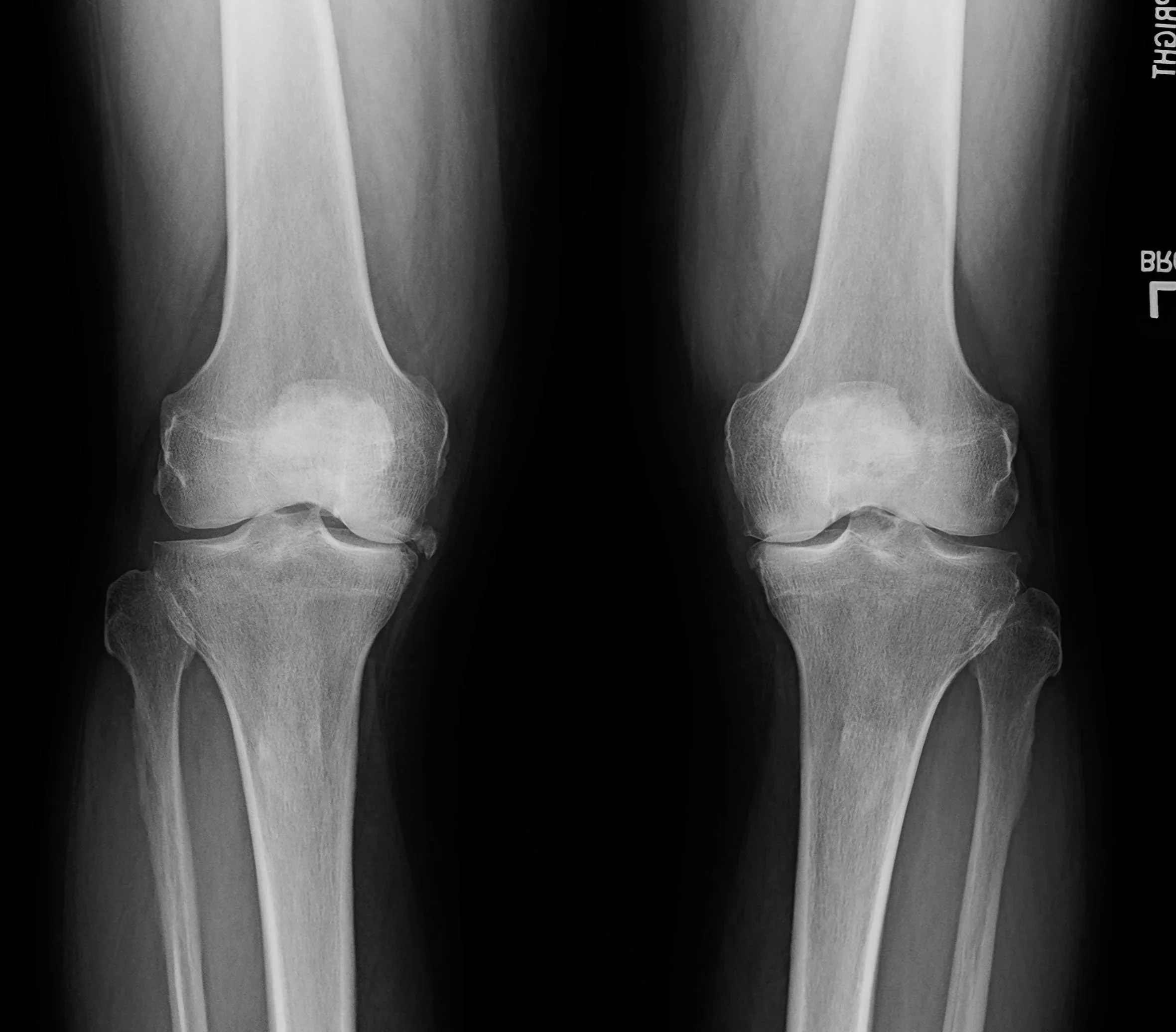
What Is Knee Arthritis?
Knee osteoarthritis develops as the smooth cartilage covering the ends of the femur and tibia gradually wears down. As cartilage becomes thinner, the joint may lose space, develop bone spurs, and become stiff or inflamed.
The knee has three compartments:
Medial — the inside of the knee
Lateral — the outside of the knee
Patellofemoral — behind the kneecap
Arthritis may remain limited to one compartment or involve the entire joint. That distinction matters because it can influence whether continued nonsurgical care, partial knee replacement, or total knee replacement is the most appropriate option.
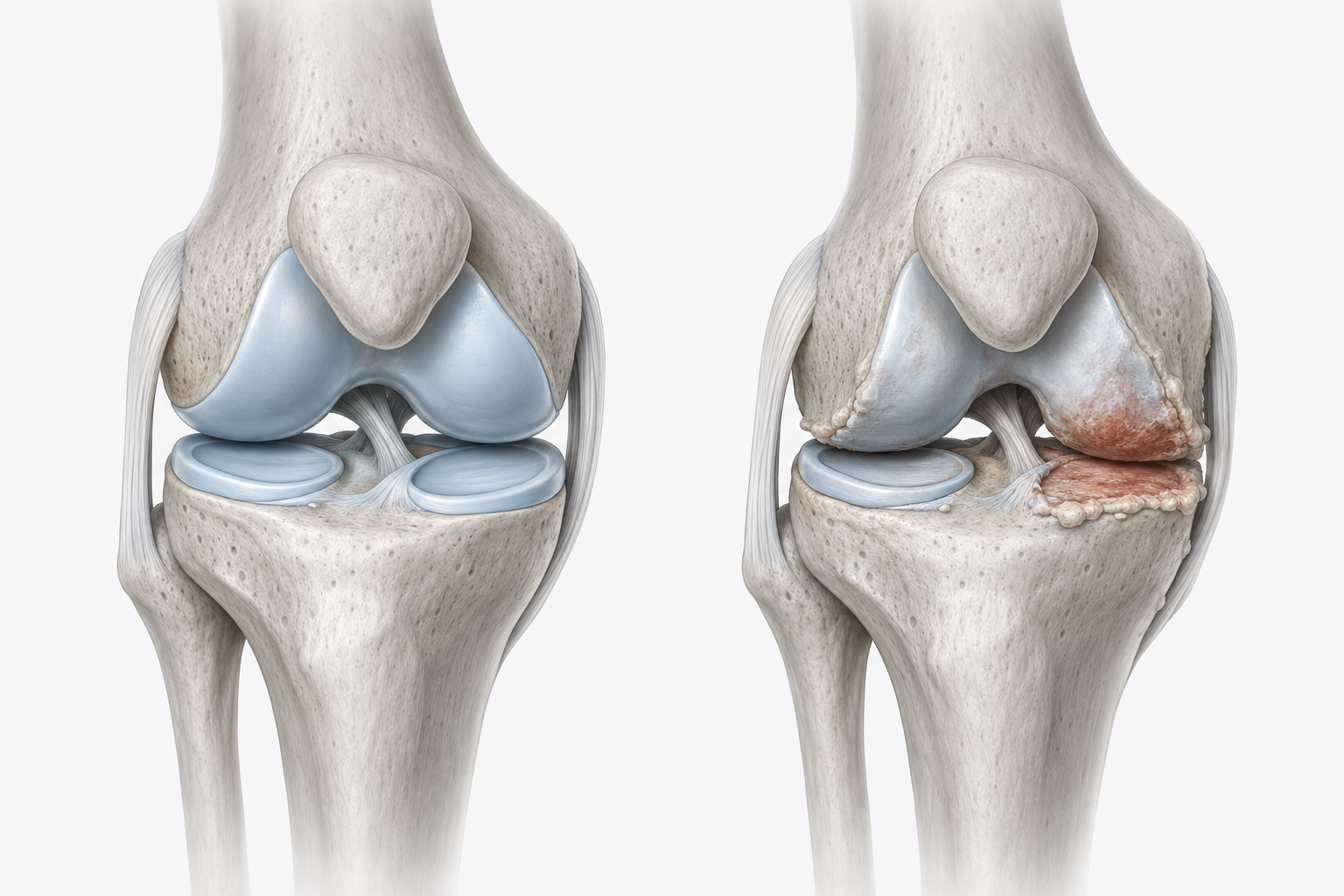
Healthy knee (left) compared with advanced medial-compartment osteoarthritis (right).
Knee Arthritis: Key Points
What does it feel like?
Pain with walking or stairs, stiffness after rest, swelling, loss of motion, and reduced confidence in the knee are common.
How is it diagnosed?
A focused history, physical examination, and weight-bearing X-rays usually provide the information needed to diagnose knee arthritis.
Does an X-ray determine treatment?
No. Imaging helps define the pattern and severity of arthritis, but treatment should reflect symptoms, function, health, and personal goals.
Can it be treated without surgery?
Yes. Exercise, activity modification, weight management, medications, bracing, a cane, and selected injections may improve symptoms.
When is surgery considered?
Surgery becomes reasonable when pain and loss of function remain unacceptable despite appropriate nonsurgical treatment.
Common Symptoms of Knee Arthritis
Knee arthritis often progresses gradually. Symptoms may be intermittent at first and become more consistent over time.
Common symptoms include:
Pain with walking, standing, stairs, or rising from a chair
Stiffness after sitting or first thing in the morning
Swelling that worsens with activity
Grinding, clicking, or a rough sensation with movement
Loss of the ability to fully straighten or bend the knee
Bow-legged or knock-kneed alignment as arthritis progresses
Pain at rest or at night in more advanced disease
The amount of arthritis visible on an X-ray does not always match the amount of pain a person feels. Some patients have significant X-ray changes with manageable symptoms, while others are limited by less advanced disease. The goal is to treat the patient, not the image.
If knee pain is persistent, worsening, or beginning to limit everyday activity, read When Should You See a Surgeon for Knee Pain?
How Knee Arthritis Is Evaluated
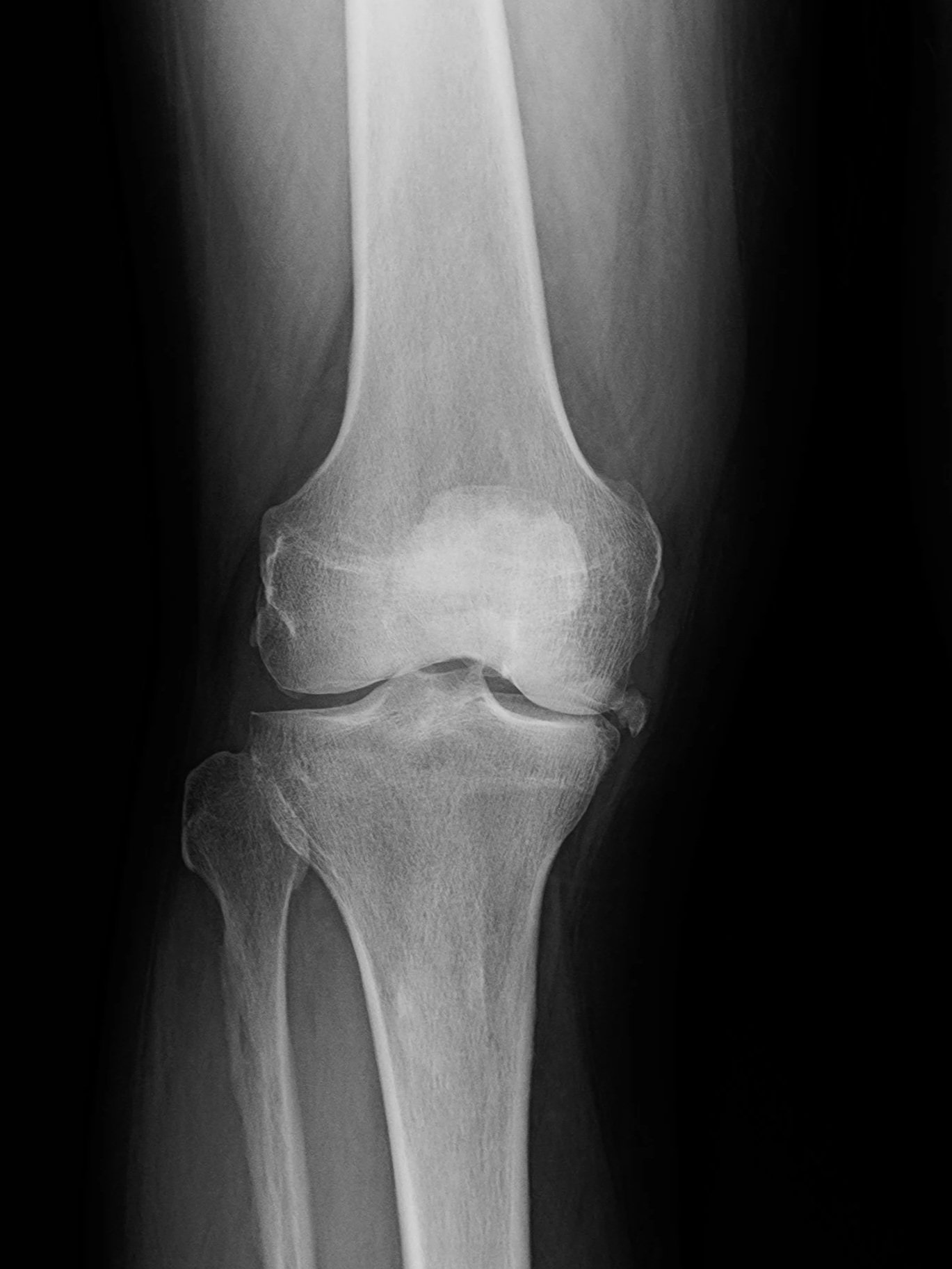
Evaluation begins with a discussion of where the knee hurts, how long symptoms have been present, which activities are limited, and which treatments have already been tried. The physical examination assesses motion, alignment, stability, swelling, strength, and the specific areas that reproduce pain.
Weight-bearing X-rays are usually the most useful first test. They can show joint-space narrowing, bone spurs, changes in alignment, and which compartments are affected. An MRI is not routinely required when the history, examination, and X-rays clearly demonstrate osteoarthritis, but it may be useful when symptoms and X-rays do not match or another condition is suspected.
Nonsurgical Treatment for Knee Arthritis
Most patients begin with nonsurgical treatment. These measures do not reverse established cartilage loss, but they may reduce pain, improve strength, and help maintain activity.
Activity and exercise
Low-impact exercise such as cycling, swimming, walking on level ground, and strength training can support joint function. Physical therapy may help improve motion, quadriceps strength, balance, and movement patterns. The goal is usually to modify painful activity—not to stop moving altogether.
Bracing
Bracing may help some patients be more active or help with endurance. A cane can also improve comfort and stability when used correctly.
Weight management
When appropriate, reducing body weight can decrease the force placed across the knee during walking and other daily activities. Even modest weight loss may improve symptoms and can also reduce surgical risk if joint replacement is eventually considered.
Injections
Corticosteroid injections may provide temporary relief by decreasing inflammation. Other injections are sometimes considered, but their benefit varies by patient and by the severity of arthritis. Injections can manage symptoms; they do not restore lost cartilage or correct deformity.
Medications
Topical or oral anti-inflammatory medications may reduce pain and swelling when they are medically safe. Acetaminophen may be an option for some patients. Medication choices should account for kidney disease, ulcers, heart conditions, blood thinners, and other health considerations.
When Is Surgery Appropriate?
Knee replacement is not based on age or X-rays alone. It is generally considered when pain, stiffness, or loss of function continues despite appropriate nonsurgical treatment and the arthritis seen on imaging matches the patient’s symptoms.
Total knee replacement
Total knee replacement is generally more appropriate when arthritis affects multiple compartments or when there is more advanced deformity. Robotic guidance helps support individualized planning, implant positioning, and ligament balancing while the surgeon remains in control of the procedure.
Partial knee replacement
Partial knee replacement may be appropriate when arthritis is confined to one compartment and the knee has suitable ligament stability, motion, and alignment. Healthy bone, cartilage, and ligaments in the remaining knee are preserved.
For a direct comparison, see Partial vs Total Knee Replacement: Which Is Right for You?
A Treatment Plan Built Around Function
The goal of an arthritis evaluation is not to move quickly toward surgery. It is to identify the source of pain, understand how it affects daily life, and choose the least invasive treatment likely to provide meaningful benefit.
When surgery does become appropriate, patients can review Dr. Gill’s knee replacement outcomes and quality data and learn more about what to expect before and after joint replacement.
Common Questions About Knee Arthritis
-
Established osteoarthritis cannot currently be reversed, but symptoms can often be managed for years with exercise, activity modification, medications, weight management, bracing, or injections. Surgery is considered when these measures no longer provide acceptable relief.
-
No. “Bone-on-bone” describes an X-ray finding, not an automatic need for surgery. Replacement is considered when imaging findings correspond with persistent pain and meaningful loss of function despite nonsurgical care.
-
Regular low-impact activity is generally helpful. Walking may be appropriate if it does not cause a prolonged increase in pain or swelling. Cycling, swimming, and strength training can be useful alternatives when walking is uncomfortable.
-
No. Injections may reduce pain or inflammation for a period of time, but they do not regrow cartilage or correct joint-space loss and deformity.
-
Usually not. Weight-bearing X-rays generally show the location and severity of osteoarthritis more clearly for treatment planning. MRI may be useful when symptoms are unexplained or another diagnosis is being considered.
-
Arthroscopy does not reliably treat the pain of established osteoarthritis because it cannot restore the worn joint surface. It may still have a limited role for a separate mechanical problem, such as a symptomatic loose body, after careful evaluation.
-
The decision depends on which compartments are affected, knee stability and alignment, range of motion, and the location of pain. A partial replacement treats isolated disease; a total replacement is usually more appropriate for arthritis involving several parts of the knee.
Considering Treatment for Knee Arthritis?
If knee pain is limiting walking, exercise, work, sleep, or daily activity, an evaluation can help clarify the diagnosis and outline the appropriate next step.